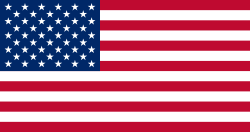
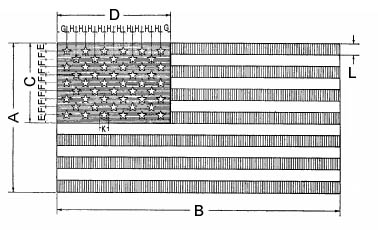
The flag of the United States consists of 13 equal horizontal stripes of red (top and bottom) alternating with white; there is a blue rectangle in the upper hoist-side corner bearing 50 small, white, five-pointed stars arranged in nine offset horizontal rows of six stars (top and bottom) alternating with rows of five stars. The 50 stars on the flag represent the 50 states and the 13 stripes represent the 13 original colonies. The United States flag is commonly called the Stars and Stripes or Old Glory. The name Old Glory was coined by Captain William Driver, a shipmaster of Salem, Massachusetts, in 1831, and was of particularly common use during the era of the 48-star version (1912 to 1959).
In blazons (a vexillological description using flag terminology), the U.S. flag is described as "A banner Gules, 6 bars Argent; the canton Azure charged with 50 mullets Argent."
Traditions
Many institutions, and some homeowners, display the flag year-round, while some reserve flag display for civic holidays like Memorial Day, Veteran's Day, Presidents' Day, Flag Day and the Fourth of July. On Memorial Day it is common to place small flags by war memorials and next to the graves of U.S. war dead.
Symbolism
To many U.S. citizens, their flag symbolizes many things. They have seen it as representing all of the freedoms and rights guaranteed in the U.S. Constitution and its Bill of Rights. Perhaps most of all they see it as a symbol of individual and personal liberty like those put forth in the U.S. Declaration of Independence.
The approved method of destroying old and tattered flags consists of burning them in a simple ceremony. The flag is cut into three pieces: first a horizontal cut is made between the seventh and eighth stripes, then a vertical cut separating the star field from the seven shorter stripes. Then the three pieces are typically placed on a pyre as 'Taps' is played. Burning the flag has also been used as a deliberate act of disrespect, at times to protest actions by the United States government, or sometimes in displays of Anti-Americanism. Some groups concerned by these actions have proposed a Flag Burning Amendment that would give Congress the authority to outlaw burning the flag in disrespect or protest.
Symbolism of the design
When the Second Continental Congress proposed the Flag Resolution on June 14, 1777, there was no particular symbolism attached to the colors or their arrangement on the flag. However, on June 20, 1782, Charles Thomson, the secretary of the Continental Congress, gave a report to the Congress defining the new Great Seal of the United States. A seal must conform to the rules of heraldry, and so meanings were attached to the colors:
Read more at Wikipedia.org





 Home
Home Benches
 American Flags
 Autumn Flags


